Pull-up Bar for Calisthenics: Types, Setup & Brands
Guide to pull-up bars for home calisthenics: wall-mounted vs doorframe, best brands, setup tips. Find the right bar for your space.
What is a pull-up bar?
A pull-up bar is a horizontal bar fixed at height, used to hang and perform vertical pulling movements. In calisthenics, it is the primary tool for all pulling work: pull-ups, chin-ups, muscle-ups, and hanging drills. Most home setups start here before any other equipment.
Pull-up bar exercises
Pull-ups and chin-ups are the core use. The difference is grip: overhand (pull-up) targets the lats and rear deltoids more directly; underhand (chin-up) adds more bicep involvement. Both train the same movement pattern and belong in any pulling program. If you cannot do one yet, the first pull-up progression gets you there on this bar with bands and negatives.
Muscle-ups require a bar with enough clearance above to transition from the pull phase to the press phase above the bar. Wall-mounted bars with a low profile won’t work. You need a bar positioned at least 40 to 50 cm from the wall, a freestanding station, or a ceiling-mounted bar.
Hanging leg raises and toes-to-bar are the most common core work on a bar. A comfortable grip at full hang is the main requirement. Most people add straps for extended hanging sets once grip becomes the limiting factor before the abs do.
Dead hangs are often underrated. A few minutes of passive hanging per week does more for shoulder health and grip strength than most dedicated exercises. If you have desk-related shoulder tightness, dead hangs address it directly.
Ring rows and Australian pull-ups (body rows) generally work better on rings or a low bar, but a standard pull-up bar handles these fine with hips bent or feet on a box.
Types of pull-up bars
| Doorframe | Wall-mounted | Freestanding | Ceiling-mounted | |
|---|---|---|---|---|
| Installation | None (pressure fit) | Screws into wall | No installation | Bolts to ceiling joist |
| Stability | Lower | High | Medium | High |
| Clearance above bar | Limited | Good | Variable | Maximum |
| Best for | Beginners, renters | Most home trainers | No wall drilling | Advanced gymnastics |
| Load capacity | 80-120 kg typically | High | High | High |
How to choose
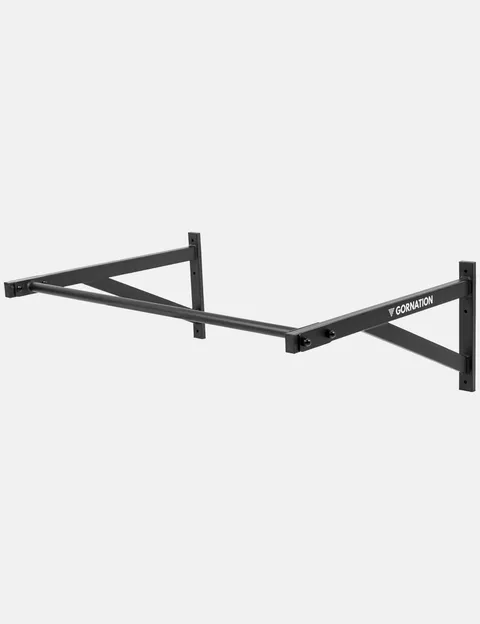
For most people in a home they can drill into, a wall-mounted bar is the right choice. It is stable, fixed at a permanent height, and takes no floor space. Installation takes about 30 minutes with basic tools and a stud finder.
If drilling into walls is not an option (renting, building restrictions), a quality doorframe bar handles pull-ups and hanging work adequately. Check the load rating before buying: cheaper models are rated to 80 kg or less, which is not enough for dynamic movements or added weight.
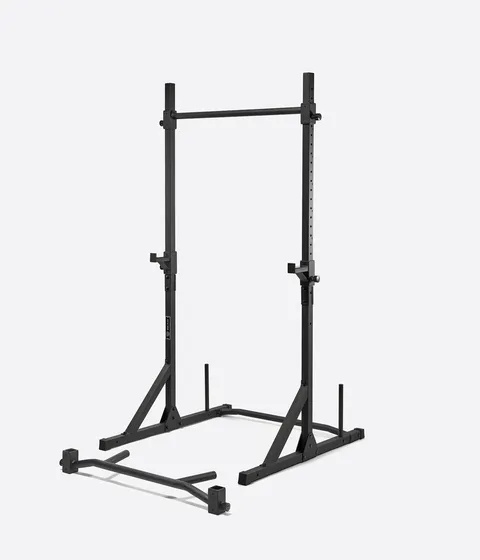
A freestanding station makes sense if you want to combine pull-ups and dips in one unit, or if you train in a space without a suitable wall. They are heavier and take more floor space than wall-mounted options.
For muscle-ups with proper clearance, or any gymnastics bar work, a ceiling-mounted bar or a standalone rig is the long-term choice. The added height above the bar removes the constraint that blocks muscle-up training on most wall setups.
Which brands make pull-up bars
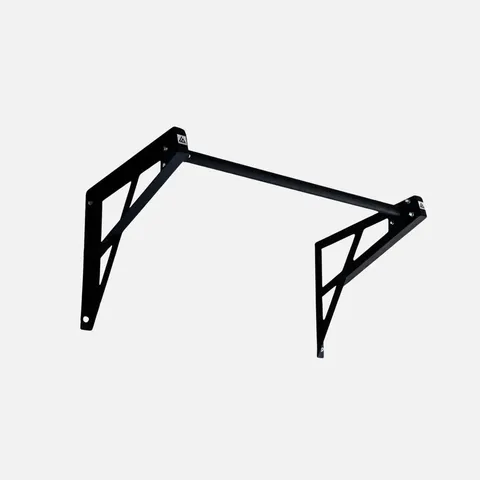
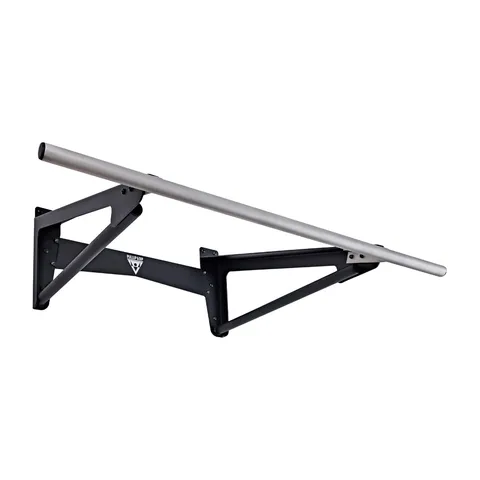
Gornation, Pullup & Dip, Eric Flag and Caliathletics all sell pull-up bars into the European market, between wall-mounted bars and freestanding stations.
Grip and technique
Grip the bar with hands at shoulder-width or slightly wider. For standard pull-ups, start from a dead hang with arms fully extended. Pull through the shoulder blades before bending the elbows - initiating with the lats rather than the arms changes both muscle recruitment and long-term shoulder health.
For muscle-up training, the false grip (wrist over the bar rather than fingers over) is the standard entry point. It keeps the wrist in position for the pull-to-press transition. Expect several weeks of conditioning before the grip feels natural.
Wrist and shoulder discomfort in early training is normal. Dead hangs specifically help decompress the shoulder joint and adapt the connective tissue. Sharp joint pain is different - stop immediately if you feel it.
FAQ
What pull-up bar for home training?
A wall-mounted bar is the most stable and durable option. If drilling is not possible, a quality doorframe bar handles pull-ups and dead hangs without issues for most people.
Can I do muscle-ups on a doorframe pull-up bar?
No. Doorframe bars don’t have the clearance above the grip needed for the transition phase. You need a wall-mounted bar positioned well away from the wall, a freestanding station, or a ceiling-mounted bar.
What grip width for pull-ups?
Shoulder-width is the standard starting point. Slightly wider shifts more load to the lats and outer back. Narrower grip increases bicep involvement and range of motion. Most people settle on a consistent width after a few months of training.
Wall-mounted vs freestanding pull-up bar?
Wall-mounted is more stable, takes less floor space, and is generally the better long-term choice for a fixed home setup. Freestanding works when wall mounting is not an option - it wobbles more under dynamic movements and takes more room.
How high should a pull-up bar be mounted?
High enough to hang with feet off the floor. For muscle-ups, add at least 60 cm of clearance above the bar for the transition. Measure your ceiling height before buying a wall bar if muscle-ups are part of the plan.
Doorframe or wall-mounted pull-up bar?
Doorframe if you rent, want no drilling, or are starting out: it covers pull-ups, chin-ups, dead hangs and band-assisted work. Wall-mounted if you plan muscle-ups, want to hang rings, or train explosive movements. Most people start on a doorframe bar and mount a wall bar later.
Do doorframe pull-up bars damage the frame?
Press-fit bars leave marks on the paint and can dent soft wood over time; a piece of cloth or rubber under the pads prevents most of it. Lever-style bars that hook over the trim put the load on the trim itself, which is the weak point. Check the frame is solid wood and not hollow before trusting either.
Can I hang gymnastic rings from a pull-up bar?
From a wall-mounted or ceiling bar, yes, as long as the straps hang vertically. Not from a doorframe bar: the bar is not anchored for swinging loads and the frame does not give the clearance rings need.